
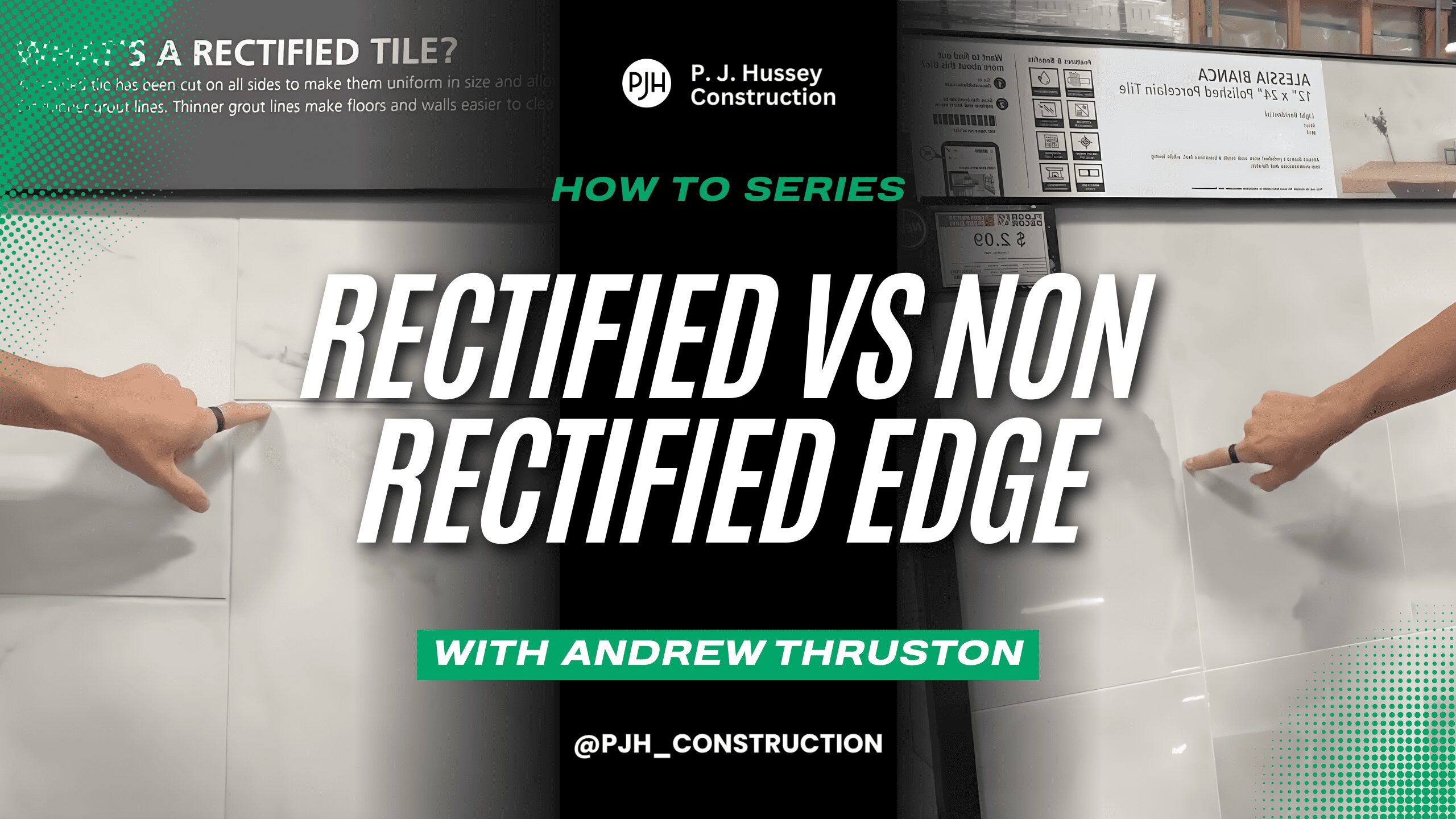
Rectified vs. Non-Rectified Tile: What’s the Difference?
When planning a tile project, one detail that often gets overlooked is the edge type of the tile. But the difference between rectified and non-rectified tile can have a big impact on the final look and performance of your space.
Let’s break it down 👇
Table of Contents
What Is a Rectified Tile?
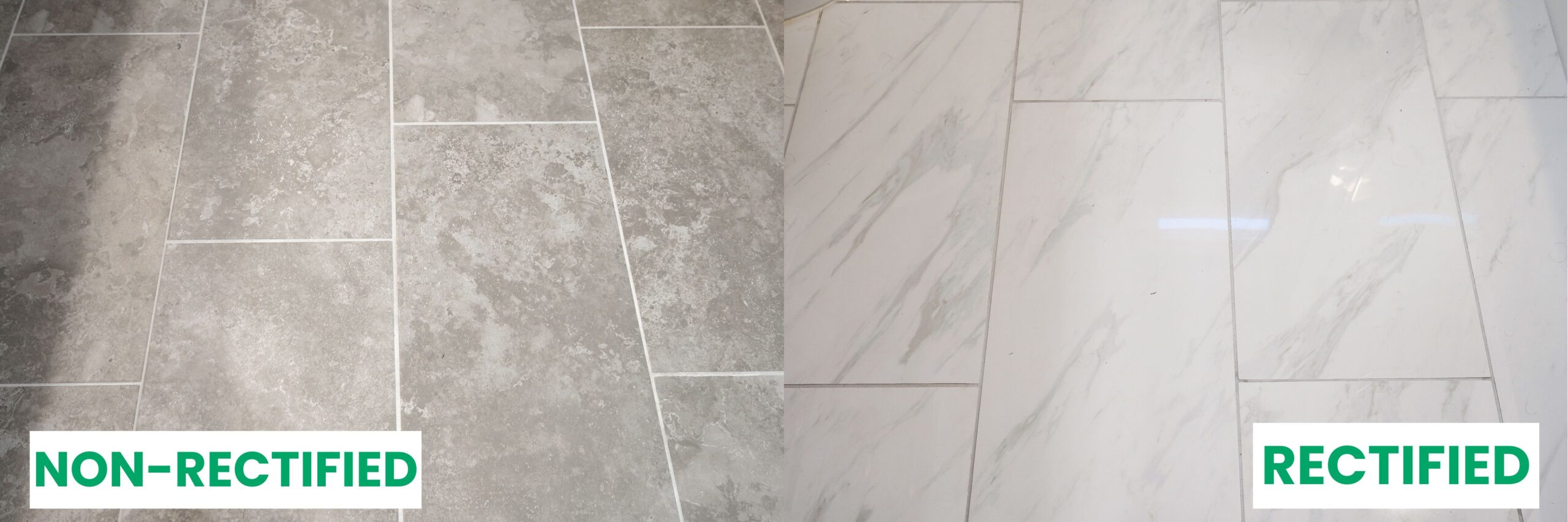
Rectified tile is cut after it’s fired in the kiln, giving it:
- Sharp, Clean Edges
- Consistent sizing across every tile
- Tighter manufacturing tolerances
Because of this precision, rectified tile allows for:
- Smaller grout lines
- A cleaner, more modern look
- Better alignment across large areas
This makes it a go-to option for:
- Open floor plans
- Large living spaces
- Long hallways
- Contemporary designs
👉 If you’re after that sleek, almost seamless finish, rectified tile is the way to go.
What Is a Non-Rectified Tile?
Non-rectified tile is formed and fired in a mold, which results in:
- Slightly rounded edges
- Minor size variations between tiles
- Less precise dimensions overall
Because of these natural variations, non-rectified tile typically requires:
- Wider grout lines
- More flexibility during installation
- A slightly softer, more traditional look
This option works well for:
- Smaller spaces
- Areas where perfect alignment isn’t critical
- More classic or rustic designs
Why It Matters for Your Project
Choosing between rectified and non-rectified tile isn’t just about looks—it affects installation, spacing, and overall finish quality.
Go with rectified tile if:
- You want tight grout joints
- You’re working with large-format tile
- You want a clean, modern aesthetic
Go with non-rectified tile if:
- You’re okay with wider grout lines
- Your space allows for slight variation
- You prefer a more traditional or forgiving install
Frequently Asked Questions
Do I need different grout lines for rectified vs non-rectified tile?
Yes. Rectified tile allows for tighter grout lines (typically 1/16″–1/8″) because of its precise edges, while non-rectified tile requires wider grout lines to account for size variation.
Which tile edge is better for a modern look?
Rectified tile is the better choice for modern designs because it creates clean lines and a more seamless appearance with minimal grout visibility.
When should I use non-rectified tile?
Non-rectified tile is a great option for smaller spaces or more traditional designs where wider grout lines and slight variation won’t impact the overall look.
Is rectified tile harder to install?
It can be. Because the edges are so precise, installation requires careful leveling and spacing to avoid uneven lines or lippage.
Does tile edge type affect cost?
Yes. Rectified tile can cost more both in material and labor due to the added manufacturing process and the precision required during installation.
Start Your Project
If you’re planning a tile upgrade or full remodel, choosing the right materials makes all the difference. Our team at PJH can help you select the best tile for your space and install it with precision.
Share this article
Follow us
A quick overview of the topics covered in this article.
Latest articles
October 18, 2026
October 18, 2026
October 18, 2026