
How to Choose Flooring, Tile and Carpet for Your Remodel
Learning how to choose flooring for a home remodel can quickly become overwhelming. Between luxury vinyl plank, hardwood, laminate, tile and carpet, homeowners have more options than ever. Each material also comes with different prices, maintenance needs, lead times and installation requirements.
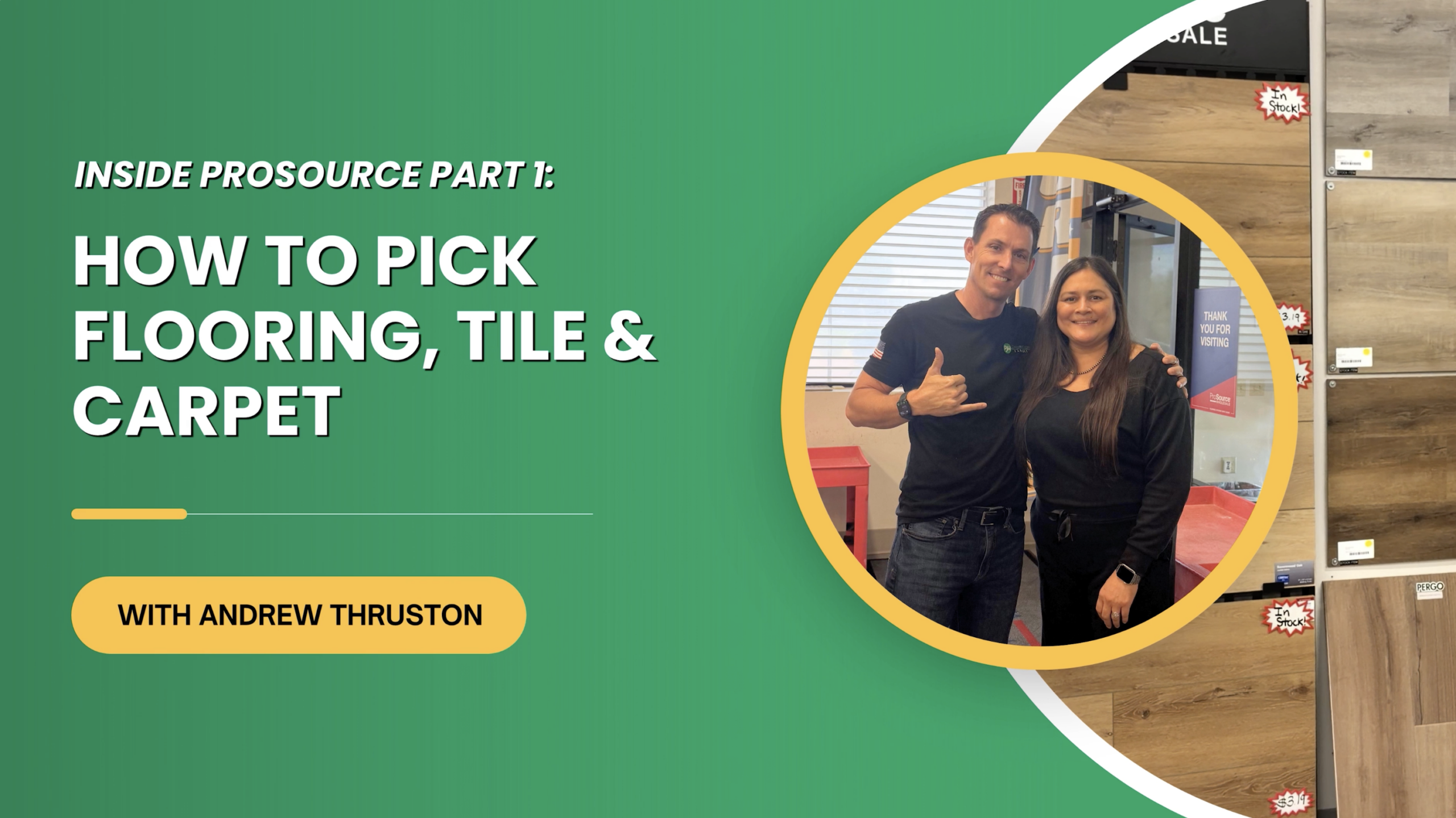
To simplify the selection process, Andrew Thruston of P. J. Hussey Construction visited the ProSource showroom. During the visit, he explored flooring, tile and carpet options while discussing what homeowners should consider before making their final selections.
Whether you are remodeling one room or updating your entire home, understanding the differences between these materials can help you make a more confident decision.
Watch the video below to tour ProSource with Andrew and learn more about choosing flooring, tile and carpet for your next remodeling project.
Table of Contents
Start With Your Remodeling Needs
When learning how to choose flooring, it helps to compare each product based on durability, appearance, comfort and maintenance. ProSource offers several popular flooring categories, including luxury vinyl plank, laminate and engineered hardwood.
Luxury Vinyl Plank
Luxury vinyl plank, commonly called LVP, is popular because it combines the appearance of wood with added durability. Many products are waterproof or water-resistant, which makes them useful in kitchens, bathrooms and other active areas.
LVP is commonly available with one of two core types:
- WPC: A wood-plastic composite core that generally feels softer and offers more cushion underfoot.
- SPC: A stone-plastic composite core that is more rigid and may feel closer to tile underfoot.
If you dislike the softer feeling associated with some floating floors, an SPC product may provide the firmer surface you prefer.
Laminate Flooring
Laminate can offer a wood-inspired appearance at an accessible price. It is generally durable and works well in many living areas. However, water resistance varies between products. Therefore, review the manufacturer’s specifications before installing laminate in areas that may experience moisture.
Engineered Hardwood
Engineered hardwood provides the warmth and natural appearance of genuine wood. Depending on the product’s construction and wear layer, it may also be refinished in the future.
However, real wood is typically more sensitive to moisture and damage than laminate or LVP. Although it may require additional care, many homeowners choose it because of its timeless appearance and long-term value.
How to Choose Flooring for Your Home
Stair nosing is the finished edge installed on the front of a stair tread when using vinyl plank flooring on stairs. It protects the edge of the stair while providing a clean and safe walking surface.
Many flooring retailers offer pre-made stair nosing that can be purchased off the shelf. These products are typically glued onto the stair after the flooring is installed. While they may be convenient, they are often thinner and less durable than custom solutions.
At PJH Construction, we typically recommend custom stair nosing that is fabricated using the same flooring material being installed. Custom-mitered stair nosing creates a more seamless appearance and becomes part of the installation rather than simply being attached on top of it.
This approach often provides a more durable and professional-looking result while reducing the risk of cracking, separation, or hollow-sounding stair edges over time.
How to Select Tile for Your Remodel
Tile is available in an enormous range of colors, sizes, finishes and patterns. As a result, it can be used for floors, showers, backsplashes, fireplaces, accent walls and outdoor spaces.
Popular tile options include:
- Large-format floor tile
- Wood-look tile
- Marble-look tile
- Decorative mosaics
- Backsplash tile
- Shower wall and floor tile
- Outdoor pavers
- Pool tile
- Stacked stone
When choosing tile, consider more than its appearance. You should also review its recommended application, slip resistance, maintenance needs and availability.
Consider Tile Size and Grout Lines
Large-format tiles, such as 24-by-48-inch options, can create a clean and modern appearance. Because fewer pieces are needed, the finished surface usually has fewer grout lines.
Smaller tile and mosaics can add detail to backsplashes, shower niches or accent areas. Some collections are offered in multiple sizes and matching mosaics. Consequently, you may be able to carry the same design throughout several areas of the room.
The tile size should also make sense for the space. Large tile can create a dramatic look, but proper preparation and professional installation are especially important.
How to Choose Carpet
Carpet selection involves more than choosing a color. Material, construction, pile height, pattern and padding can all affect the price, comfort and performance of the finished floor.
For example, a thicker carpet is not automatically more expensive or more durable. A thinner product may cost more because of its fiber, manufacturer or construction method.
When comparing carpet, ask about:
- Fiber and material
- Stain resistance
- Pet warranties
- Soil protection
- Pile height
- Pattern and texture
- Cleaning requirements
- Recommended padding
Pet-friendly carpet can be especially valuable for busy households. Certain collections offer additional warranties covering pet stains and soil. Still, homeowners should review the exact warranty terms before ordering.
Do Not Overlook Carpet Padding
The carpet pad affects how the flooring feels underfoot. It can also contribute to the carpet’s support and overall performance.
Showrooms may offer padding samples that allow you to compare firmness and comfort. Test the carpet together with the recommended pad whenever possible. This gives you a more accurate idea of how the finished flooring will feel in your home.
Take Flooring Samples Home
One of the most important steps when learning how to choose flooring is viewing samples inside your home. Showroom lighting is often brighter and different in color from residential lighting. Therefore, a product that looks perfect in the showroom may appear noticeably different in your space.
Bring several samples home and view them:
- During the morning and evening
- Under natural light
- With your existing wall colors
- Next to cabinets and countertops
- Beside nearby flooring
- Under your home’s interior lighting
Taking home at least three options makes it easier to compare colors, prices and availability without committing too quickly.
Check Availability and Lead Times
Some showroom products are kept in stock and may be available quickly. Others must be ordered from a manufacturer or distributor.
Many selections may arrive within several business days. However, specialty or imported materials can take weeks or even months. Always confirm availability before making a final decision, particularly when construction is already scheduled.
It is also helpful to choose two or three acceptable options. If your first choice is unavailable, an alternative selection may prevent the entire remodeling schedule from being delayed.
Coordinate All Your Material Selections
Flooring, tile and carpet should complement the other finishes in your home. Instead of selecting every item separately, compare the materials as one complete design.
Bring samples of the following when possible:
- Cabinet finishes
- Countertops
- Paint colors
- Hardware
- Plumbing fixtures
- Existing flooring
- Furniture fabrics
Reviewing the materials together can help you identify undertones and avoid combinations that clash once installed.
Frequently Asked Questions
What is the best flooring for a busy household?
Luxury vinyl plank, laminate and tile are popular options for busy households because they can offer excellent durability. The best material depends on the room, moisture exposure, pets and preferred maintenance level.
Should I take flooring samples home before deciding?
Yes. Flooring can look different under residential lighting and next to your cabinets, walls and furniture. Take several samples home and view them at different times of day before choosing.
What is the difference between WPC and SPC flooring?
WPC uses a wood-plastic composite core and generally feels softer underfoot. SPC uses a stone-plastic composite core, creating a more rigid surface that may feel closer to tile.
How early should I select flooring and tile?
Make selections as early as possible during the planning process. In-stock products may be available quickly, while specialty or imported materials could take several weeks or months to arrive.
Plan Your Remodel With P. J. Hussey Construction
Knowing how to choose flooring is only one part of planning a successful remodel. The materials must also fit the design, budget, installation requirements and construction schedule.
P. J. Hussey Construction helps Phoenix-area homeowners move through the remodeling process with clear guidance from planning through completion. If you are considering a kitchen, bathroom, addition or whole-home remodel, our team is ready to help.
Share this article
Follow us
A quick overview of the topics covered in this article.
Latest articles
October 18, 2026
October 18, 2026
October 18, 2026