
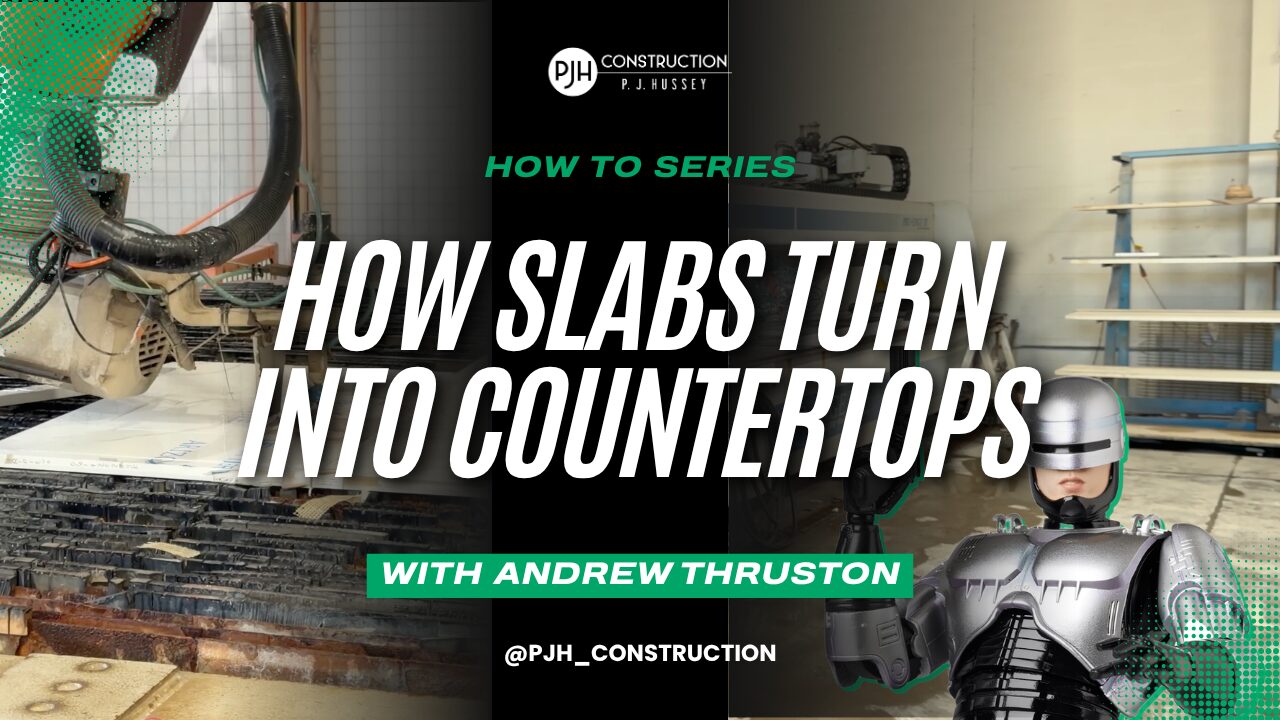
Countertop Fabrication Process: Inside B’s Granite Shop
Ever wondered how a raw slab of stone turns into a finished kitchen countertop?
In this video, we go inside a professional stone fabrication facility to break down the full countertop fabrication process from start to finish. We’re at B’s Granite and Marble, where the team walks us through how slabs are selected, mapped, cut, and finished using advanced equipment like the Robo SawJet.
From vein matching to precision cutting, this is a behind-the-scenes look at what really goes into high-quality stone fabrication.
Table of Contents
What Is the Countertop Fabrication Process?
The countertop fabrication process is the series of steps used to turn raw stone slabs into finished countertops that are ready for installation.
While most homeowners only see the final product, the process behind it is detailed and highly technical. It typically includes:
- Slab selection and inspection
- Layout and vein matching
- Digital templating
- CNC or waterjet cutting
- Edge finishing and polishing
- Sink and fixture cutouts
- Preparation for installation
Each step matters because even small adjustments can completely change how the final countertop looks and fits.
Inside B’s Granite and Marble Shop
At B’s Granite and Marble, the fabrication process starts with careful planning and collaboration.
The team evaluates each slab for color consistency, veining direction, and how different pieces will come together once installed. This is where experience matters—because the goal is to make the finished surface look continuous and natural, even across seams.
Sujey and the fabrication team walk through how every project is mapped before any cutting begins, ensuring accuracy and material efficiency.
How Vein Matching Works
One of the most important parts of luxury countertop fabrication is vein matching.
Vein matching is the process of aligning natural patterns in stone so they flow seamlessly across multiple slabs or sections. When done correctly, it creates a continuous visual effect that makes the countertop look like one solid piece.
Using digital layout tools, the team positions each section of the slab to determine how the veins will connect across seams, waterfall edges, and corners.
This step is what separates standard installations from high-end custom work.
The Robo SawJet in Action
A major highlight of the shop is the Robo SawJet, one of the most advanced stone-cutting machines in the industry.
This machine combines precision saw cutting with high-pressure waterjet technology. It allows fabricators to:
- Cut sink openings with extreme accuracy
- Shape complex edge details
- Reduce material waste
- Improve speed and consistency
The system is fully computer-controlled, meaning every cut is pre-planned digitally before the machine begins working. This ensures accuracy and reduces the risk of damaging expensive slabs.
From Digital Layout to Finished Stone
Before any cutting happens, each countertop is digitally mapped.
The fabrication team creates a layout that shows exactly where each piece will be cut from the slab. This includes seam placement, vein alignment, and cutout locations for sinks and fixtures.
Once approved, the design is sent directly to the Robo SawJet, which executes the cuts with precision.
After cutting, pieces move on to polishing and finishing, where edges are refined and surfaces are prepared for installation.Not all cabinets are built the same. Understanding cabinet
Why Fabrication Quality Matters
The difference is in the fabrication quality.
The quality of fabrication directly impacts:
- How well seams align
- How natural the stone pattern looks
- The durability of edges and cutouts
- The overall finish of the kitchen or bathroom
High-quality fabrication ensures that the final installation not only looks better but also lasts longer.
Frequently Asked Questions
How do I choose the right stone for my countertops?
Choosing the right stone depends on your lifestyle, budget, and design goals. Quartz is popular for low maintenance, while granite and marble offer more natural variation. The best way to decide is to view slabs in person and see how the color and veining work in your space.
Can countertops be customized for unique kitchen layouts?
Yes. Countertops are custom-fabricated for each space. This includes special edge profiles, waterfall edges, sink cutouts, backsplashes, and unique shapes designed to fit specific kitchen or bathroom layouts.
What happens if I don’t like the slab layout?
Before cutting begins, the layout is reviewed and approved digitally. At this stage, adjustments can often be made to improve vein alignment or visual flow. Communication during this step is key to ensuring the final result matches your expectations.
Do seams in countertops always show?
Seams are sometimes necessary depending on slab size and layout, but skilled fabrication can make them much less noticeable. Proper vein matching, color blending, and seam placement all help reduce their visibility in the finished product.
What should I do to prepare for countertop installation?
Before installation, ensure cabinets are fully installed, level, and secure. Appliances and plumbing should also be properly coordinated so the installation process goes smoothly without delays.
Ready for New Countertops?
From slab selection to precision fabrication, we handle the entire countertop process with expert craftsmanship and attention to detail.
If you’re planning a remodel, we’ll help you choose the right stone, design the layout, and bring it to life with professional fabrication and installation.
Share this article
Follow us
A quick overview of the topics covered in this article.
Latest articles
October 17, 2026
October 17, 2026
October 17, 2026