
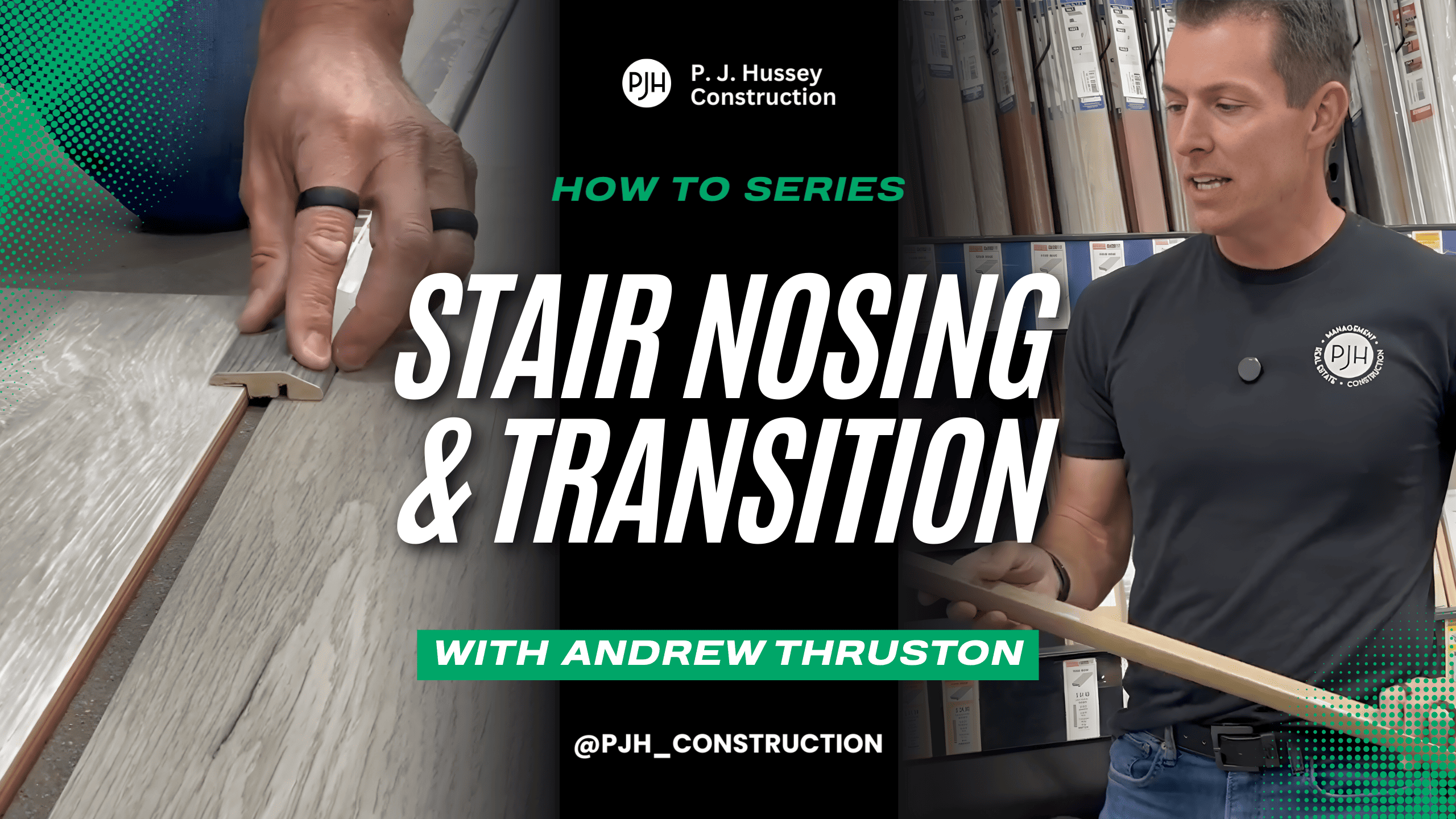
Vinyl Plank Flooring Transitions Explained: Stair Nosing, T-Moldings, Reducers & Quarter Round
When planning a vinyl plank flooring installation, most homeowners focus on choosing the right color and style of flooring. However, the transition pieces and finishing details are just as important to the appearance, durability, and functionality of your new floor.
Understanding the purpose of stair nosing, T-moldings, reducers, and quarter round can help you make better decisions during your flooring project and avoid common installation issues.
In this guide, we’ll explain the most common vinyl plank flooring transitions and when each should be used.
Table of Contents
Why Vinyl Plank Flooring Transitions Matter
Vinyl plank flooring transitions do more than create a finished appearance. They help accommodate movement, protect flooring edges, and provide a safer transition between rooms and flooring materials.
Choosing the wrong transition piece can lead to premature wear, damaged flooring edges, trip hazards, and an unprofessional appearance. That’s why it’s important to understand which transition works best for each application.
What Is Stair Nosing?
Stair nosing is the finished edge installed on the front of a stair tread when using vinyl plank flooring on stairs. It protects the edge of the stair while providing a clean and safe walking surface.
Many flooring retailers offer pre-made stair nosing that can be purchased off the shelf. These products are typically glued onto the stair after the flooring is installed. While they may be convenient, they are often thinner and less durable than custom solutions.
At PJH Construction, we typically recommend custom stair nosing that is fabricated using the same flooring material being installed. Custom-mitered stair nosing creates a more seamless appearance and becomes part of the installation rather than simply being attached on top of it.
This approach often provides a more durable and professional-looking result while reducing the risk of cracking, separation, or hollow-sounding stair edges over time.
When to Use a T-Molding
A T-molding is used when transitioning between two flooring surfaces that are similar in height.
The profile gets its name from its “T” shape. The molding bridges the gap between two floors while allowing both flooring materials to expand and contract as needed.
Common applications for T-moldings include:
- Connecting two rooms with vinyl plank flooring
- Transitioning between similar-height flooring materials
- Connecting a kitchen floor to a nearby laundry room
- Bridging flooring at doorways
Because both flooring surfaces are at approximately the same elevation, a T-molding creates a smooth and professional transition.
When to Use a Reducer
A reducer is used when transitioning between flooring materials with different heights.
For example, if your vinyl plank flooring sits lower than an adjacent tile floor, a standard T-molding may leave an undesirable gap or create an uneven transition. A reducer gradually slopes from the higher surface to the lower surface, creating a safer and more attractive transition.
Reducers are commonly used when transitioning between:
- Vinyl plank flooring and tile
- Vinyl plank flooring and concrete
- Vinyl plank flooring and existing flooring with a different thickness
- Interior and exterior flooring surfaces
Using the correct reducer helps prevent trip hazards while improving the overall appearance of the installation.
Should You Use Quarter Round?
Quarter round is a finishing trim that can be installed along the perimeter of a room when baseboards are left in place during a flooring installation.
The quarter round covers the expansion gap between the flooring and the baseboard, creating a finished appearance without removing existing trim.
Benefits of quarter round include:
- Faster installation
- Reduced labor costs
- No need to remove baseboards
- Easier installation in occupied homes
However, quarter round does create an additional trim piece along the wall that some homeowners may not prefer.
At PJH Construction, we typically recommend removing and reinstalling the baseboards whenever possible. This allows the vinyl plank flooring to slide underneath the trim and creates a cleaner, more seamless appearance.
Custom Flooring Details Make a Difference
The small details of a flooring installation often make the biggest difference in the final result.
Choosing the proper transition pieces, using custom stair nosing, and planning transitions correctly can improve both the appearance and longevity of your floors.
While many flooring accessories can be purchased off the shelf, selecting the right products for your specific application helps ensure a professional finish that performs well for years to come.
Final Thoughts on Vinyl Plank Flooring Transitions
Vinyl plank flooring transitions are an important part of every flooring installation. Whether you’re installing new flooring throughout your home or updating a single room, understanding when to use stair nosing, T-moldings, reducers, and quarter round can help you achieve a better final result.
If you’re planning a flooring project and want guidance on the best installation methods for your home, our team can help.
Frequently Asked Questions
What is stair nosing used for?
Stair nosing is installed on the front edge of a stair tread to protect the flooring edge, improve safety, and create a finished appearance. It is an essential component when installing vinyl plank flooring on stairs.
Is custom stair nosing better than store-bought stair nosing?
Custom stair nosing is often more durable and provides a more seamless appearance because it is fabricated using the same flooring material as the rest of the installation. Many off-the-shelf stair nosing products are thinner and may be more prone to cracking, separation, or wear over time.
What is the difference between a reducer and a T-molding?
A T-molding is designed for flooring surfaces that are approximately the same height, while a reducer is used when one flooring surface is higher than the other. A reducer creates a gradual slope between the two elevations for a smoother transition.
Do I need quarter round when installing vinyl plank flooring?
Quarter round is not always necessary. If baseboards are removed and reinstalled during the flooring installation, the flooring can typically be installed underneath the trim for a cleaner appearance. Quarter round is often used when homeowners prefer not to remove existing baseboards.
Schedule a Free Flooring Estimate
At PJH Construction, we help homeowners throughout the Phoenix area select and install flooring systems that are built to last. From custom stair nosing to professional transitions and trim work, we focus on the details that make a difference.
Contact us today to schedule your free estimate and learn more about your flooring options.
Share this article
Follow us
A quick overview of the topics covered in this article.
Latest articles
October 17, 2026
October 17, 2026
October 17, 2026